The History of Our Saviour’s Church
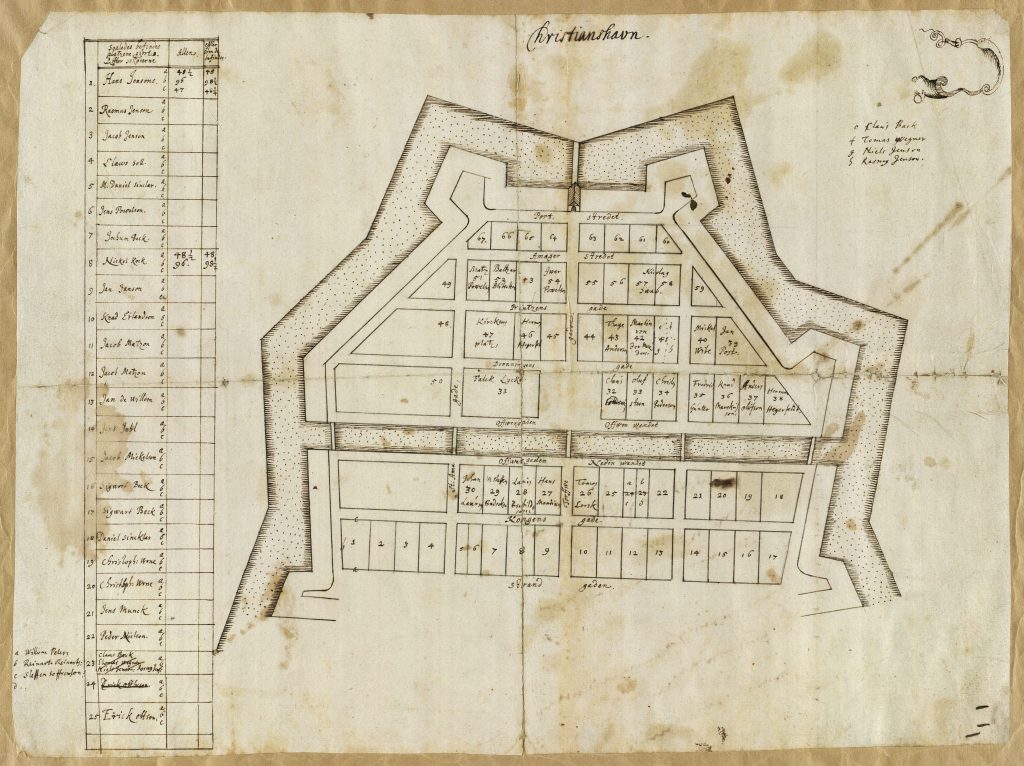
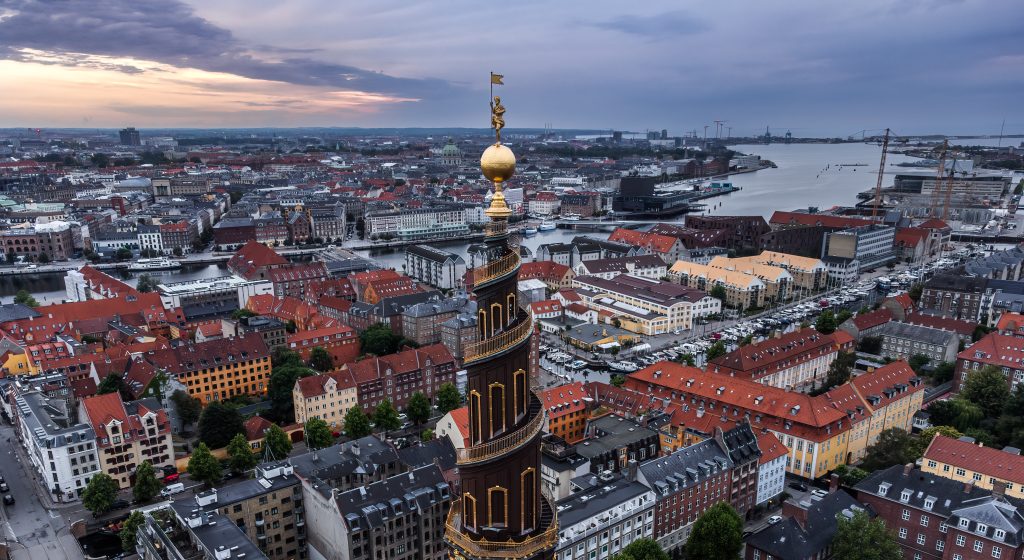
Christian IV of Denmark founded Christianshavn in 1618. It was established as an entirely new trading town on the sandbanks between Copenhagen and Amager, inspired by the canal cities of the Netherlands. In 1640, the first church in Christianshavn was completed — a wooden church with room for a rather small congregation, which at the time consisted of almost as many German-speaking as Danish-speaking churchgoers.
Christianshavn quickly began to expand, however, and after only a few years the wooden church proved too small and too poorly constructed for the future. The idea of a larger, more solid, and more magnificent church therefore soon emerged. But who would undertake such a grand project?
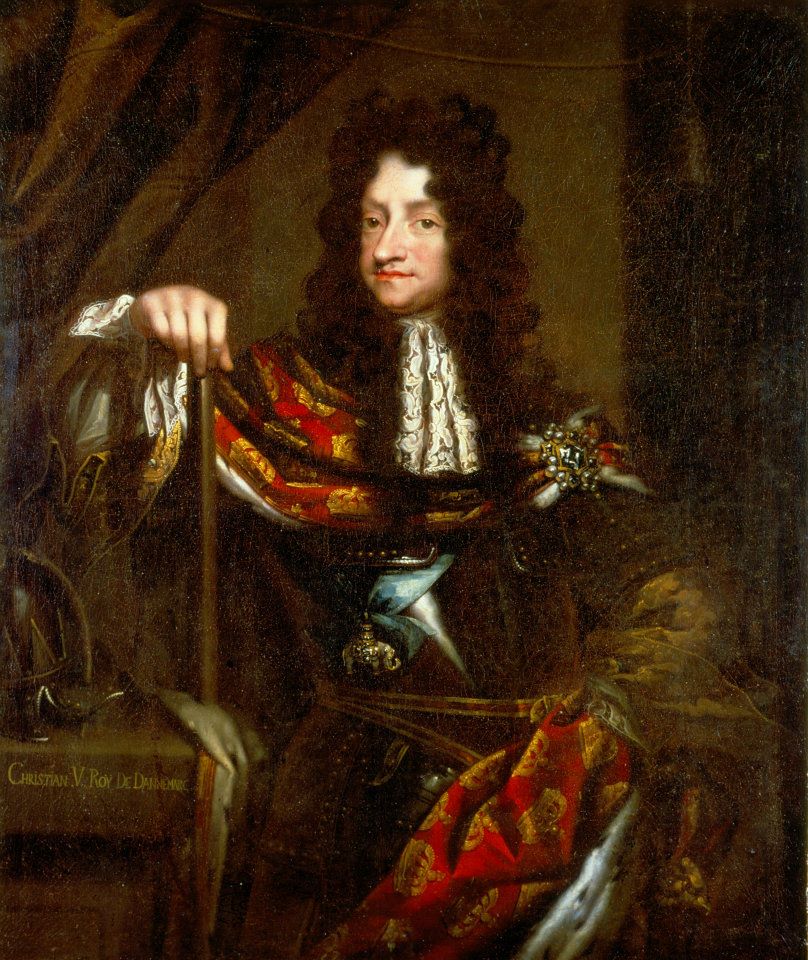
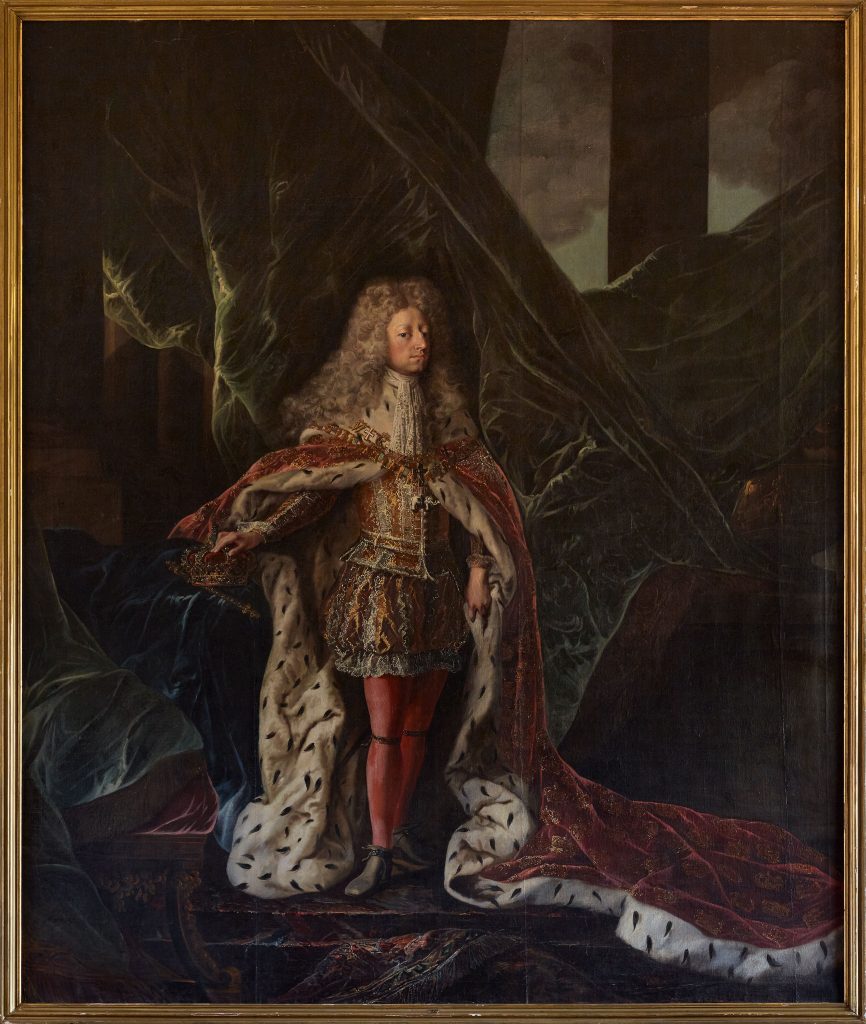
The patron of the new church became Christian V of Denmark, grandson of the city’s founder and Denmark’s first hereditary absolute monarch. His father, Frederick III of Denmark, had established enlightened absolutism as the governing system after the major challenges posed by the wars with Sweden. When Christian ascended the throne in 1670, he was tasked with consolidating the absolute monarchy.
Although the country’s finances did not allow for major church building projects, the king nevertheless wished to demonstrate his power — not least through architecture. The young Danish absolute monarchy drew inspiration from the rulers of Europe, especially Louis XIV in France, where splendour and magnificence were important tools for maintaining authority. The new church in Christianshavn was therefore intended to be something truly extraordinary and spectacular.
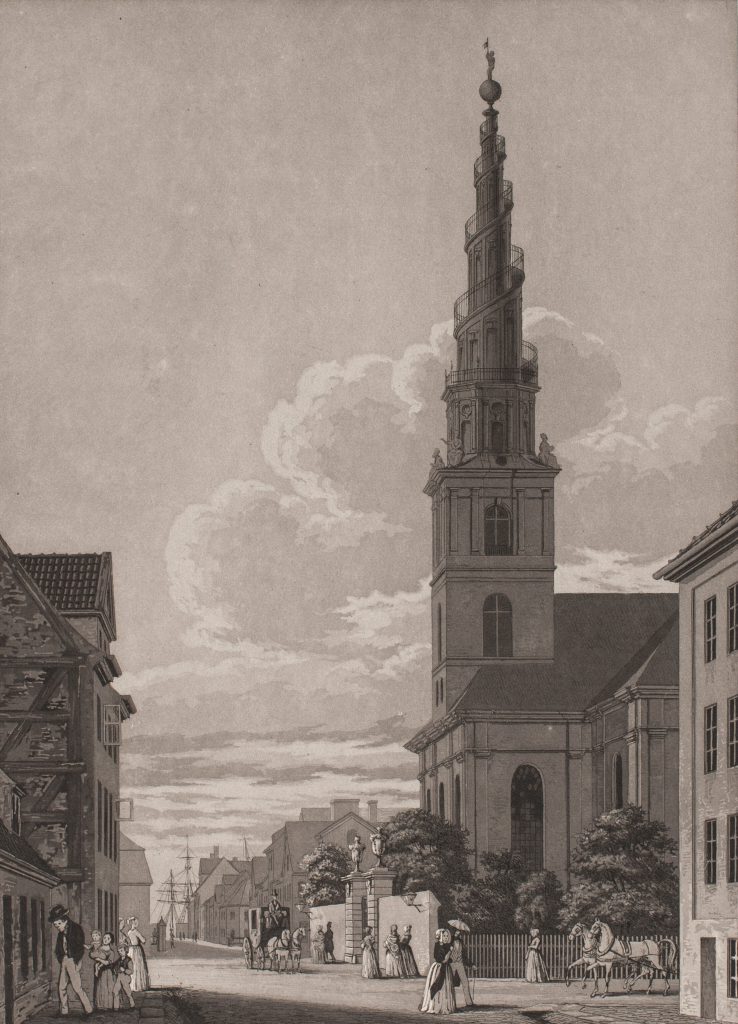
The foundation stone of Our Saviour’s Church was laid on 19 October 1682 by King Christian V himself. In the years leading up to this, more than eighty craftsmen and labourers had struggled to prepare the marshy ground for construction — land that only a few years earlier had been seabed. Heavy building materials were transported from near and far by horse-drawn wagons and wooden cranes.
Our Savior’s Church was completed in April 1696. At the time, Christianshavn was a fortified town on the water, where newly dug canals, busy warehouses, and shipyards stood side by side with the mighty bastions and ramparts that protected the city from enemies approaching from the sea.
The Architecture and the Architect
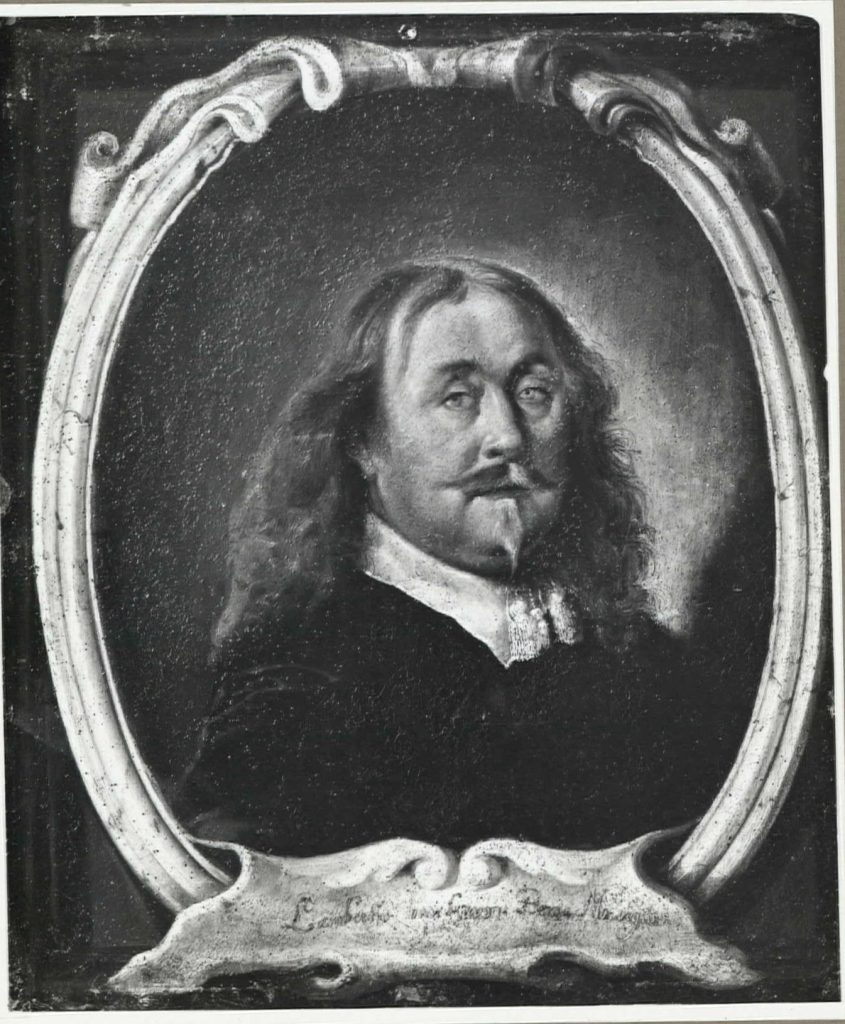
Master Builder General and architect Lambert van Haven (1630–1695) was the king’s preferred choice when it came to building in the architectural style of the Baroque period.
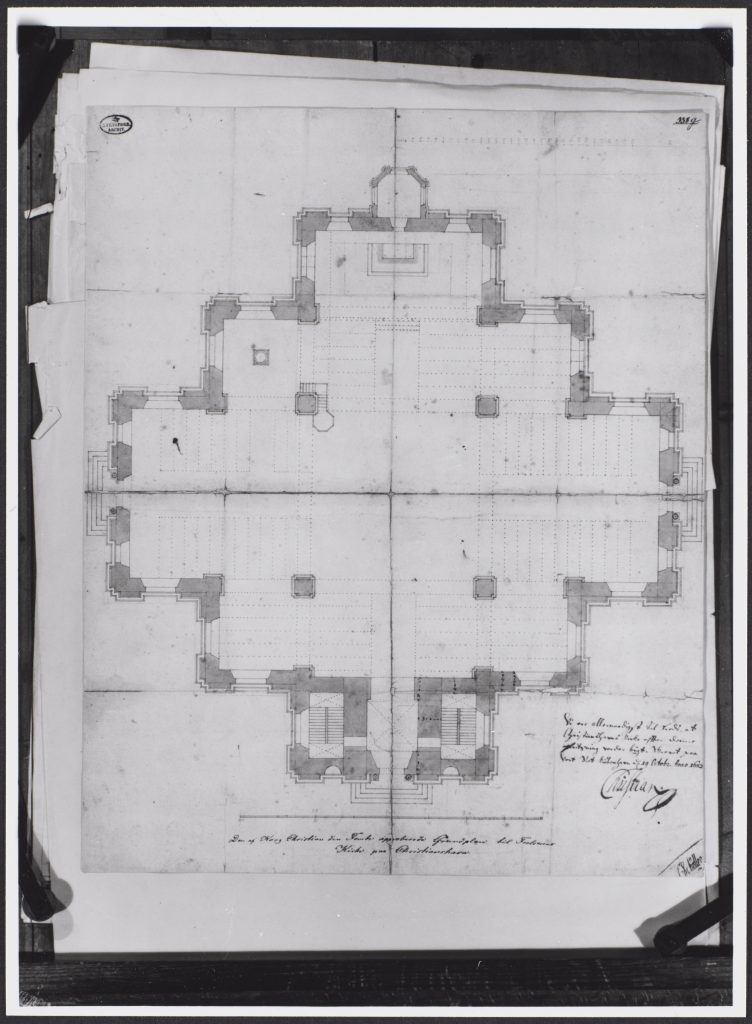
Van Haven had a remarkable eye for detail, a sense of finesse, and a talent for grand, monumental lines. His first design for the great new church was approved by King Christian V — the church’s proud patron — with the words:
“We are most graciously pleased that the church of Christianshavn shall be built according to this drawing. Written at our castle in Copenhagen, October 1682.”
From the very first plans for the new church, the architect worked within the Palladian-Dutch tradition: a solemn Northern European Baroque style distinguished by the so-called “giant order,” in which pilasters divide the façades from base to cornice. In Church of Our Saviour, the pilasters rise almost uninterrupted from the plinth to the cornice beneath the roof — nearly the full height of the masonry walls — creating a powerful sense of vertical order and rhythm. The ground plan is shaped as a Greek cross with equal arms and corner chapels.
This grand architectural order is clearly visible in the church walls’ pattern of red, yellow, and grey bricks, resting on a solid granite foundation with sandstone cornices beneath the roof — a true Templum Salvatoris (“Temple of the Saviour” — Church of Our Saviour), where every element has its rightful place. The thinking behind the architecture was both precise and deeply theological, reflecting the orthodox Protestant understanding of the age: all creation has its ordained order — an order intended to mirror God the Father, Almighty and Infallible, in His divine work of creation.
By Danish standards, the dimensions of the church are immense. The height to the ceiling beams reaches 36 metres. The walls and four great pillars rest upon massive boulders buried in deep trenches, extending all the way down to Copenhagen’s limestone layer.
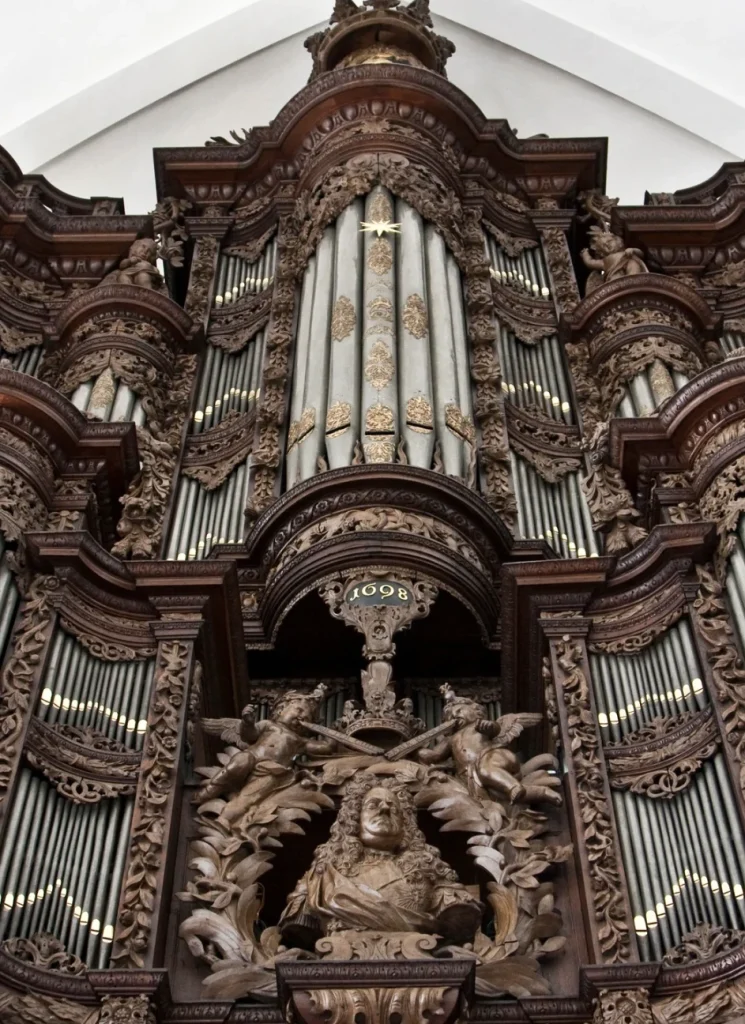
Our Saviour’s Church was consecrated on 19 April 1696 by Christian V, who was not hesitant to show the world that he had financed and overseen the construction from its very beginning in 1682. The construction process took fourteen years, largely because the entire district had been constructed on reclaimed seabed, making the church’s foundations exceptionally difficult and time-consuming to establish. The king wanted his name attached to one of the city’s great architectural works — and in the new big church he certainly achieved that: his name appears on the entrance portal, his monogram hangs in the ceiling of the central vault, and on the façade pipes of the organ.
The Church Interior
and visual language
The interior of Our Saviour’s Church holds many stories. In the beautifully ornamented pews, members of the congregation from all social classes have sat since 1696. Merchants, craftsmen, nobility, the poor, mothers, fathers, and children gathered here to take part in life’s great events and to share everyday life within the church community.
At that time, seating in the church was assigned: access to pews was purchased, and the finest seats — facing the central aisle, closest to the altar and pulpit — were reserved for the wealthiest and therefore most distinguished families in the congregation.
The social hierarchy of society was strongly reflected within the church interior, and it was important both to see and hear — and to be seen by the rest of the congregation. The space is both grand and beautiful, and for many people more than 300 years ago it was the only place where they could encounter fine craftsmanship and religious symbolism on such a scale.
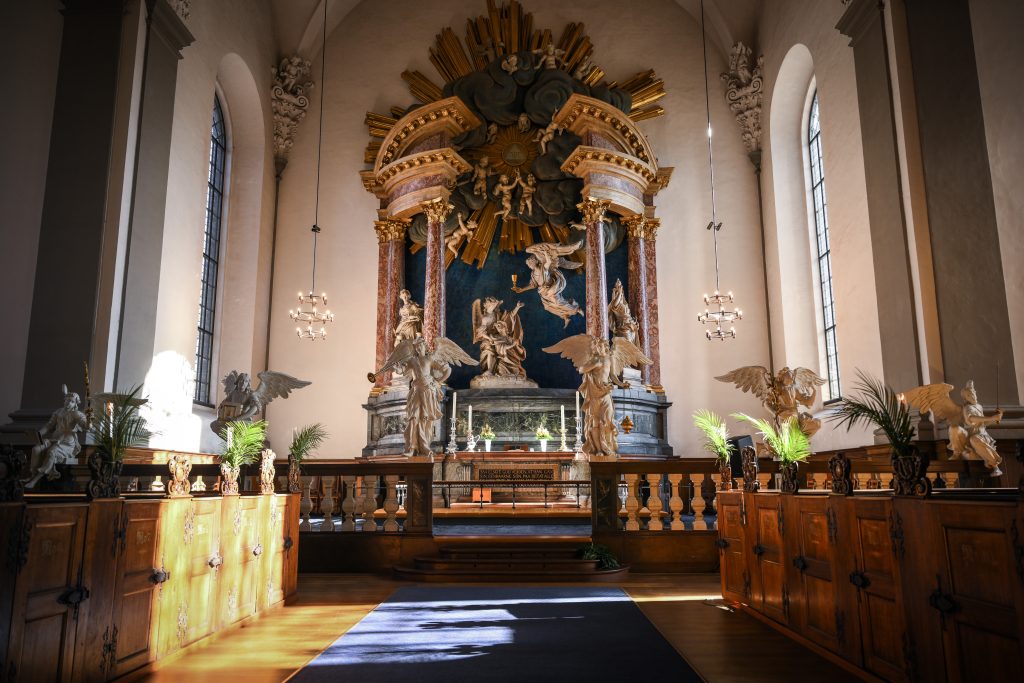
It was the German-born stonemason and sculptor Christian Nerger who, together with his workers, created many of the figures in the church interior in sandstone, stucco, and wood carving.
Nerger began this intricate work in 1694, when the first Evangelist figures in the church ceiling were carved. Later came the ceiling’s star decoration and the royal monograms in the vault of the crossing, executed in stucco. The many angel figures in the church interior were also modelled by Nerger, and most of them carry musical instruments and verses from the Psalms of David. At the baptismal font on the left side of the nave, depictions can be found of the Father, the Son, the Holy Spirit in the form of a dove, and John the Baptist.
The altar
The altar is the focal point of the church interior — a spiritual centre where the biblical narrative forms the foundation for all church rituals, accompanying the congregation from baptism to burial.
It was the Swedish architect Nicodemus Tessin the Younger who, in 1694, was commissioned to design an altar that, with drama and strength, would fit into Christian V’s new and grand church. However, it would take a full 40 years before the altar, as it appears today, was finally installed in the church interior.
In the open space between the marble columns, the central narrative can be seen: Christ, on the evening of Maundy Thursday, is comforted by an angel while praying in the Garden of Gethsemane. From the right, another angel flies in, holding the golden chalice above Christ’s head. Between the columns stand symbolic statues which, like those on the organ from 1698, reflect Christian V’s royal motto — piety and justice.
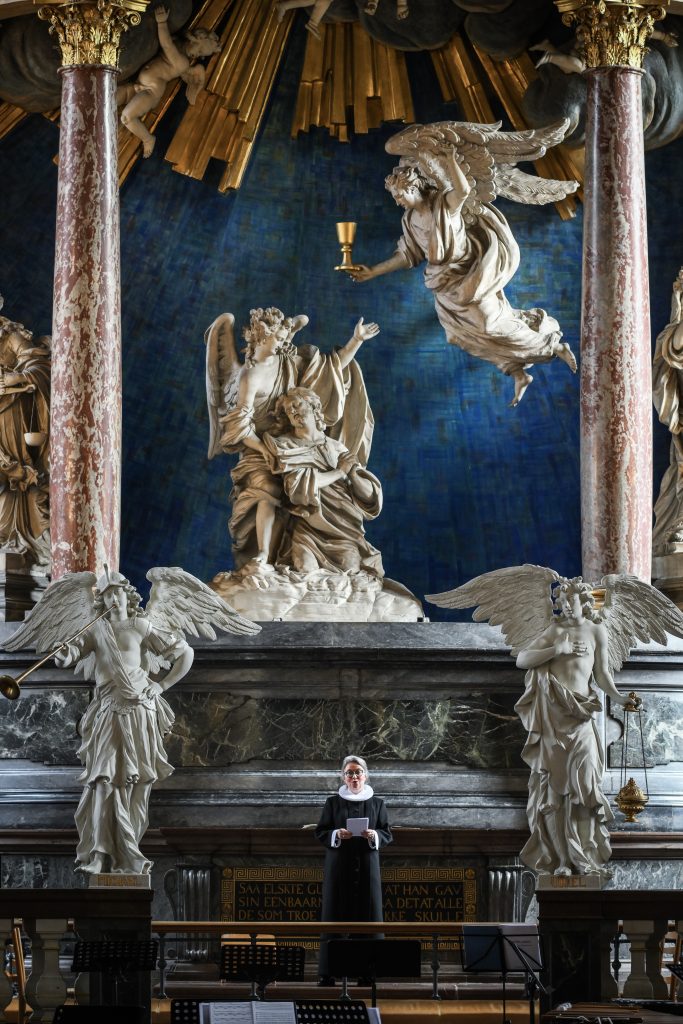
Above the main narrative, Tessin placed the name of Yahweh (God) in Hebrew letters, surrounded — as a kind of explosive radiance — by a mass of clouds in which cherubic figures play, while golden rays shine in all directions. In Tessin’s sketch you can also see a large closed royal crown hovering above the great altar. This crown was never included in the finished altar, but it was undoubtedly Tessin’s way of honouring the powerful Danish absolute monarchy. The altar was completed in 1730.
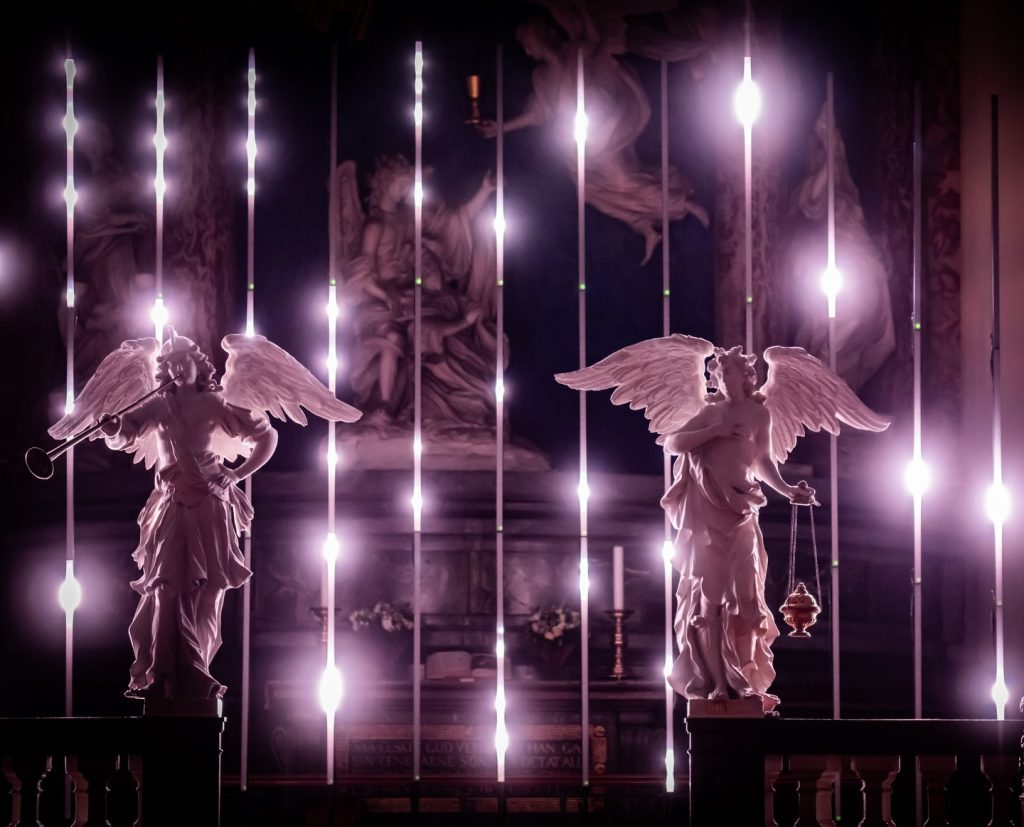
In front of the altar itself stand the six large angels that adorn the altar’s choir screen. These beautiful figures were created by the sculptor Erich Warnheim. They are named after the archangels described in the Bible: Gabriel, Uriel, Michael, Raphael, and the Old Testament prophet Jeremiah. On the far left sits the cherub with the flaming sword, who guarded Adam and Eve from returning to Paradise after the Fall.
The angels
In front of the altar itself stand the six large angels that adorn the altar’s choir screen. These beautiful figures were created by the sculptor Erich Warnheim. They are named after the archangels described in the Bible: Gabriel, Uriel, Michael, Raphael, and the Old Testament prophet Jeremiah.
Angels appear repeatedly throughout both the Old and New Testaments as messengers from God. The word “angel” comes from the Greek angelos, meaning “messenger,” which underlines their role as bearers of divine communication.
From the left, we see the cherub with the flaming sword, who guarded Adam and Eve from returning to Paradise after the Fall. The cherub is not an archangel, but someone had to teach us the burden of original sin.
Next, Jeremiah kneels with a book in his hand. He is also not an archangel, but a prophet from the Old Testament. In his book of the Old Testament, chapter 1, verse 15, it is written: “For I am calling all the families of the kingdoms of the north.” Perhaps this was reason enough to place him on the choir screen in Church of Our Saviour during the absolutist reign of Frederick IV.
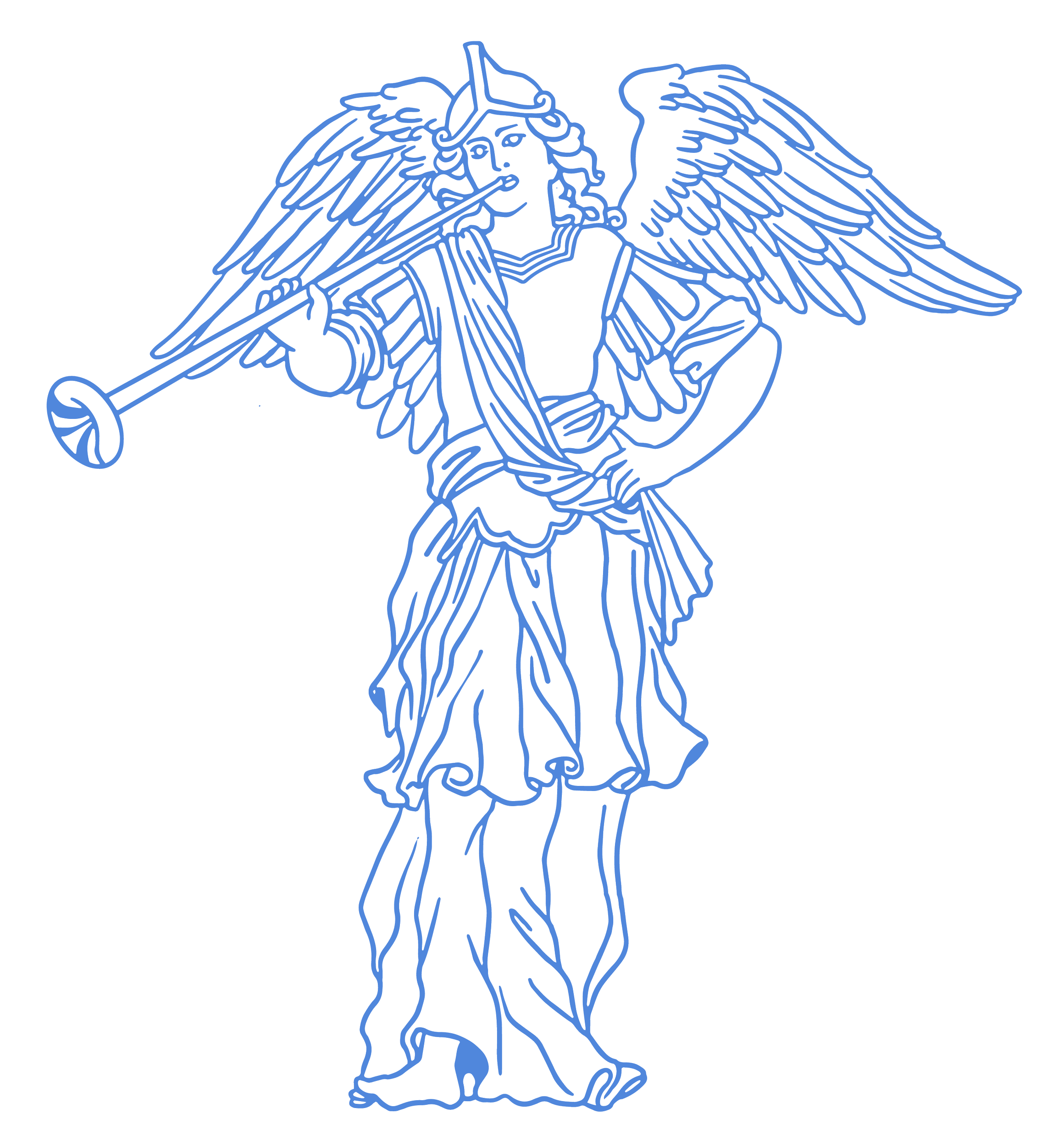
On the left side of the entrance to the choir stands Michael. He is one of the three archangels, and it is he who, on the Day of Judgement, will blow his trumpet and awaken the dead from their graves. For now, however, in the Church of Our Saviour, he keeps his trumpet safely away from his mouth.
On the other side of the entrance stands Uriel, also a true archangel. He swings a censer, thereby sanctifying the altar area. In Milton’s Paradise Lost, Uriel is the angel who most strongly defends the connection between angels and humans. In mythological terms, Uriel is linked to Greek mythology — archangels can have children with human women, just as Zeus had famous children with beautiful Hellenistic women.
Gabriel, who kneels beside Uriel, is more widely known. He is God’s messenger who told Mary that she would give birth to Jesus. Gabriel holds a palm branch in his hand — both an angel of peace and a foreshadowing of Palm Sunday, when the Passion of Christ begins.
Finally, Raphael sits with a staff and an ointment jar. Raphael is also a “true” archangel — he is the angel of healing, hence the vessel of medicinal balm.
The pulpit
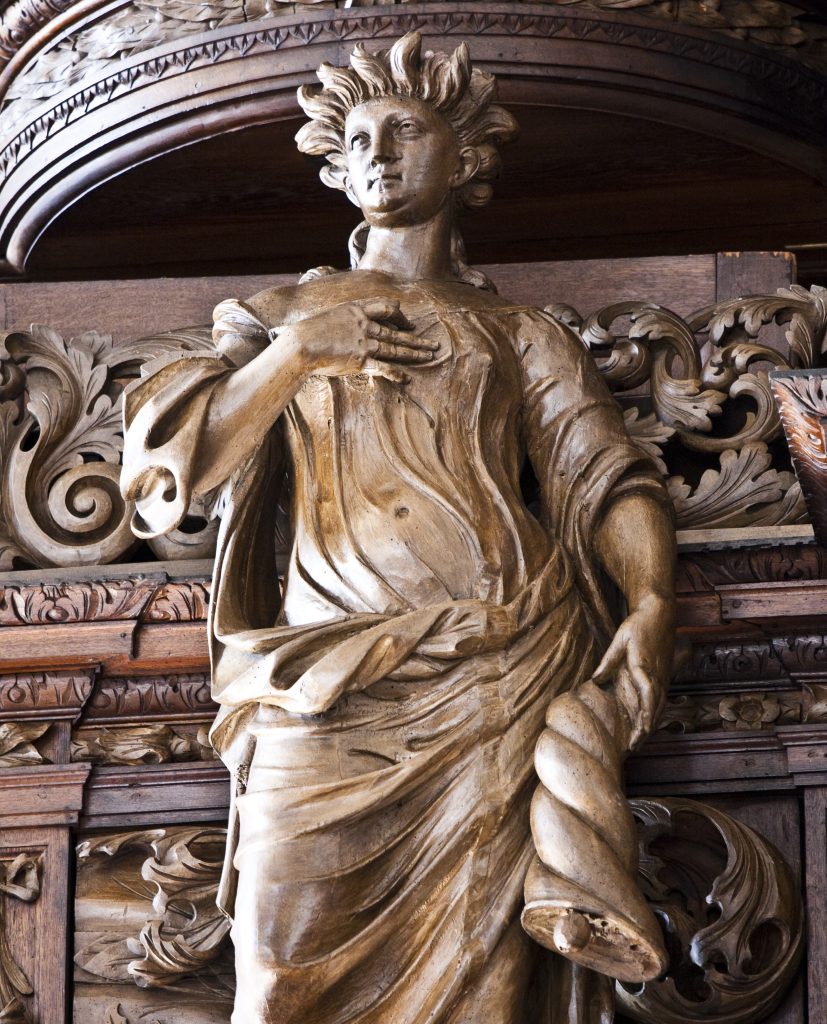
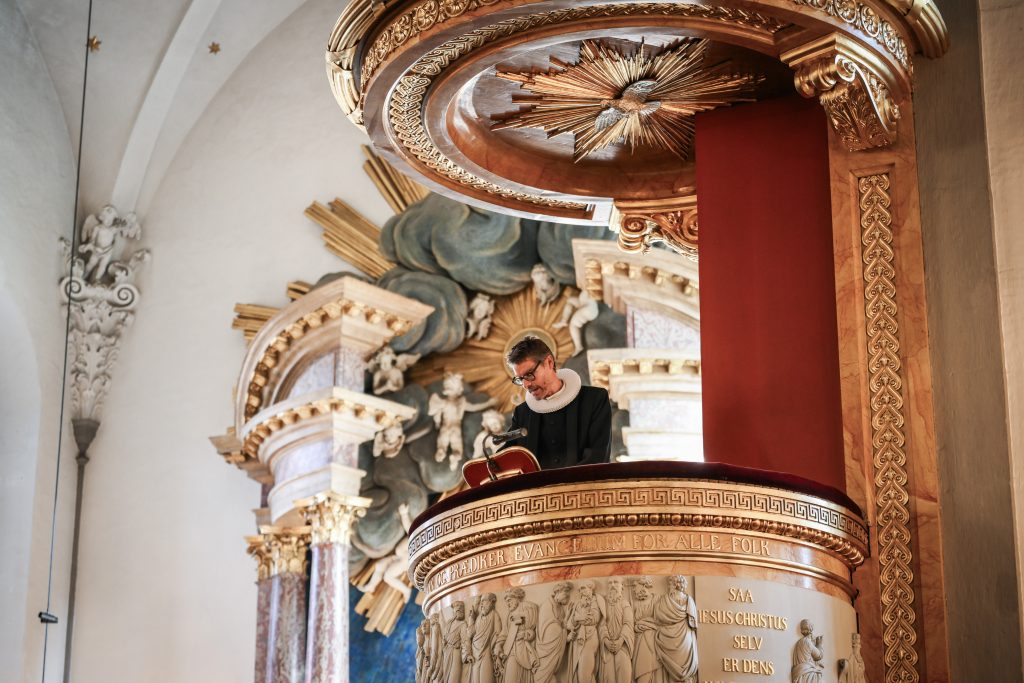
The pulpit is one of the most beautiful focal points of the church interior. With its gilded top and intricate ornamentation, it immediately draws the eye with its fine detailing. The pulpit you see in the church today dates from 1773 and was designed by the classical architect C.F. Harsdorff. It is a cylindrical balcony with a staircase, decorated with the apostles in a Greco-antique style relief.
When the church was consecrated in 1696, a very different pulpit had originally been planned by the architect Lambert van Haven. This pulpit, like the church itself, was a gift from Christian V. In the months leading up to the consecration, it was being crafted in Norway, but it was lost at sea during transport to Copenhagen. Described as “distinguished and carved in Norwegian marble,” its loss was a great sorrow for both the king and the congregation, who had waited for it for months.
Did you know?
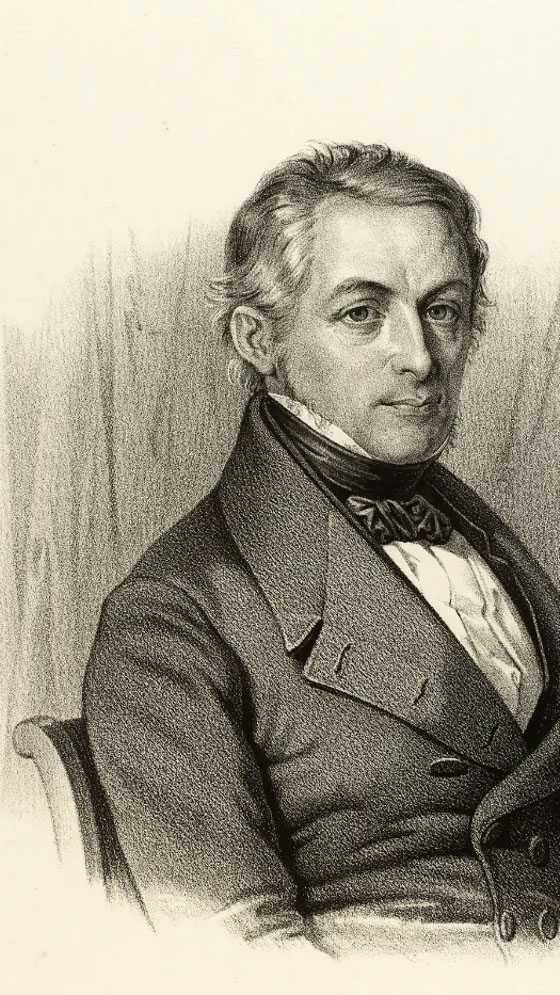
N. F. S. Grundtvig served as a priest at Church of Our Saviour from 1822 to 1826.
During his time as priest in the church, he wrote hymns such as “Den signede dag med fryd vi ser” (“The blessed day we see with joy”) and preached regularly from the pulpit you can see in the church today.
The Baptismal Font
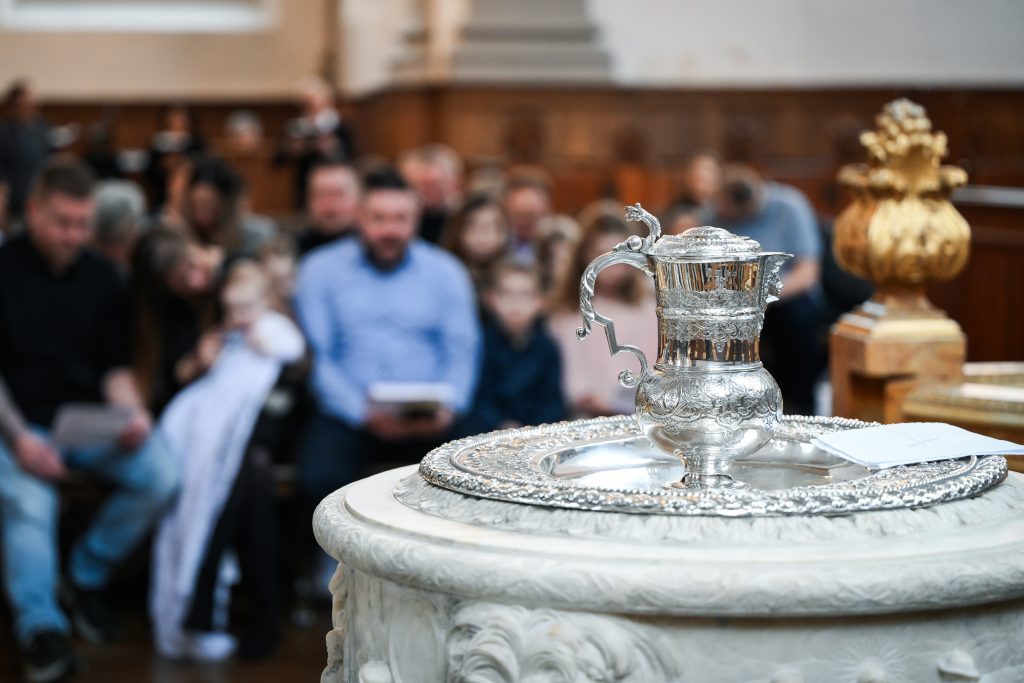
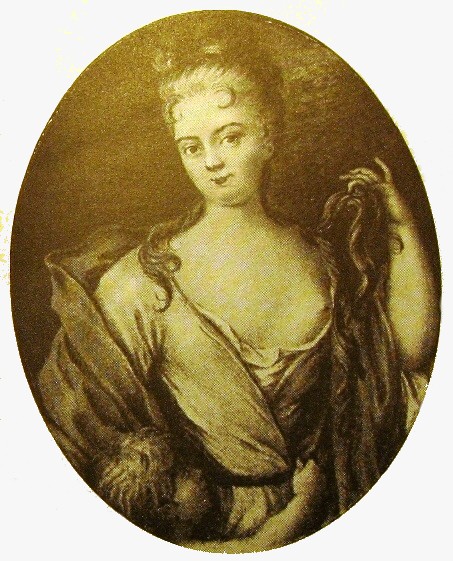
The old baptismal font, located on the left side of the altar, was donated to the church in 1700 by Countess Elisabeth Helene von Vieregg. The beautifully decorated font was an expensive gift, featuring a richly ornamented cover supported by small naked putti (chubby, nude boy figures in art, related in form to angels), a marble basin, and gilded woodwork.
Elisabeth Helene von Vieregg married Christian V’s son, Frederick IV, in 1703 — to the left hand — when she was 24 years old. Vieregg had previously been a lady-in-waiting to Frederick’s sister, and the couple had been almost inseparable since 1699, despite Frederick being married at the same time to his queen, Louise of Mecklenburg.
These left-hand marriages were relatively common in the Danish royal court, but the relationship with Vieregg nevertheless caused public outrage. Despite this opposition, the young couple continued their relationship, and on 18 June 1704 Elisabeth gave birth to a son, Frederick Gyldenløve — a surname given to all acknowledged illegitimate children of kings. Elisabeth herself died shortly afterwards in childbirth, and both mother and child were buried beneath the floor of Church of Our Saviour.
Gallery
Måske er du også interesseret i…
Tårnets historie
Læs mere tårnets historie
Orglet
Læs om orglet
Besøg kirken
Planlæg dit besøg
Besøg tårnet